
9th – early 13th century. represent a period when, with the arrival and spread of the religion of Islam in Central Asia, a new art in terms of subject matter and style began to form. The lands between the Amu Darya and Syr Darya rivers re-ceived an Arabic name — Maverannahr — Zarechye. The importance of this event is undeniable — it is precisely the art of the Islamic time, the first period of its heyday fell on the 9th – early13th centuries, became the basis on which the culture of our region developed in subsequent centuries.
Contents of the era of the 9th–13th centuries. determine intensive processes in the economy, political, social and cultural life. unprecedented trade turnover within the caliphate, the rapid growth of cities and handicraft production, the emergence of local independent states and dynasties in Iran, Khorasan, Maveran-nahr. In Central Asia in the 10th–11th centuries. marked by an active expansion of handicraft production in cities, the growth of their population and territory. Starting from this period, for almost a millennium, a new type of urban culture was formed and developed in the Central Asian interfluve. Its main features were the active growth of trade and craft zones, the inclusion of the region in the orbit of general Muslim culture, and the active interaction of urban culture with the cul-ture of nomadic peoples. Cities become the main generators of new artistic ideas, urban culture is the backbone for this period (Khakimov, 2011, p. 7).
At the same time, the religious, trade and economic factor begins to play a huge role in the development of urban culture. At this time, Samarkand, Bukhara, the cities of Fergana and Khorezm play an important role in the process of cultur-al and trade exchange between the West and the East. It is noteworthy that urban culture is becoming more active in the northeastern regions of Central Asia, where
“there is an intensive settling of nomads (Belenitskiy, Bentovich, Bolshakov, 1973 p. 351). The cities of Maverannahr are becoming the main strongholds of the new religion, according to Grunebaum, «Islam from its inception has been an urban formation both in spirit and in its main centers» (Grunebaum, 1988).
Islam has radically changed the socio-economic, town-planning infrastructure and architectural appearance of the cities of the Central Asian Mesopotamia. This is the time of the emergence of trade and craft cities and their new plastic sil-houette, a change in urban planning and architectural priorities in general. The structure of the simple internal hierarchy of the pre-Islamic city (the architecture of citadels and castles with the adjacent rural district) is now noticeably more complex. The cities of Termez, Samarkand, Bukhara are becoming a large mul-tifunctional organism, including administrative, palace, cult-religious, trade and craft, fortifications, engineering and other structures.
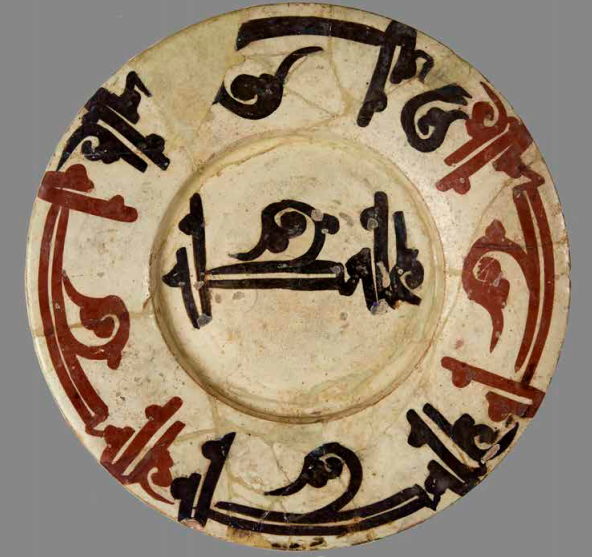
Starting from the 11th century, after the fall of the power of the Samanid dy-nasty, dynasties of Turkic origin — the Ghaznavids, Karakhanids, Seljukids, and then the Temurids — came to the political arena. In the applied arts, this process also finds its own kind of reflection. Thus, the spread of glazed ceramics in Afra-siab of the 11th–12th centuries in the decor. The researchers associated the carpet style of ornamentation with a colorful color scheme with the process of Turkiza-tion of Maverannahr (Tashkhodjaev, 1967, p. 140, fig. 35–39).
11th-early 13th centuries were the time of the final formation of a single style of the general caliphate style of art “... in the 11th-13th centuries. Central Asia ranks among the most advanced civilizations of the East and West. A new style of art is finally emerging. It soon covers the entire Middle and Near East ”(Rempel L. I. 1978, p. 28). In culture and art, along with the process of the formation of a common Islamic style throughout the territory of the Caliphate, models of local art schools based, in particular, on the symbiosis of Iranian-Turkic components, are also seen.
The Islamic factor played a decisive role in the applied arts and architecture of our region until the beginning of the 20th century. Thus, chronologically, the concept of «Islamic art» in its full sense in relation to the cultural heritage of the peoples of Uzbekistan can be determined by the time frame of the 9th–early 20th centuries.